
Your child at the dentist
We teach children that the dentist is not a scary place. Calmly, at their pace, and with explanations they understand.
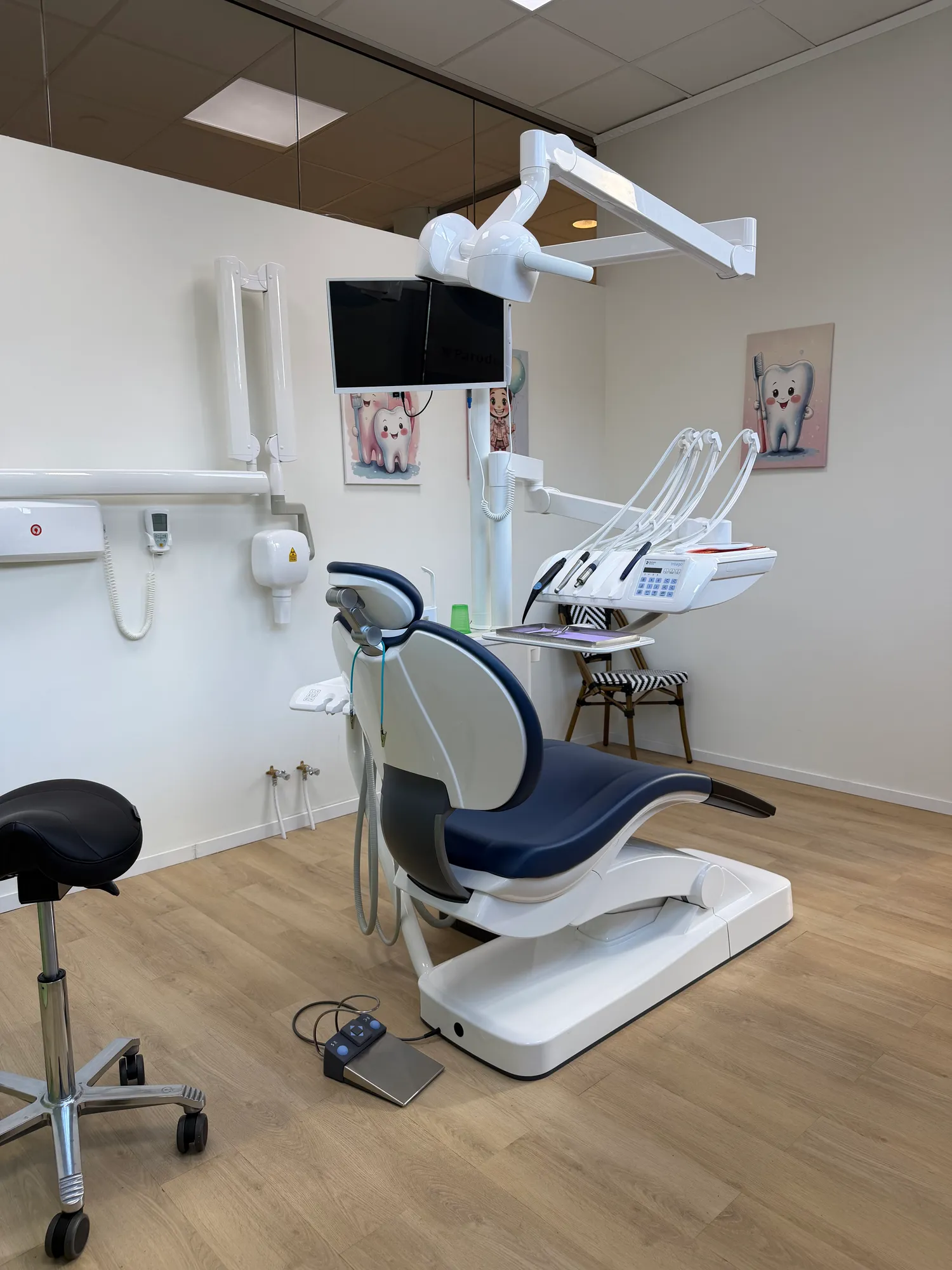
Welcome from the age of two
The sooner a child gets used to the chair, the more normal it becomes.
Explanations at their level
We show what we do before we do it — no surprises.
Free until 18 years
Dental care for children is covered by the basic insurance.
Your child's first visit to the dentist can be exciting, both for you and your child. It is important to make this experience as positive as possible so that your child feels comfortable. In this guide, we provide practical tips on how to prepare your child for a visit to the dentist, what to discuss, and how you as a parent or caregiver can play a supportive role.
Familiarizing with the practice
A good way to prepare your child for a dental visit is to visit the practice together before the appointment takes place. This provides the opportunity to explore the environment, meet the dentist and staff, and look at the treatment chairs. This can help reduce anxiety and spark curiosity.
You can also read or watch books or videos about dental visits. This makes the subject more accessible and less frightening for your child. Seeing other children going to the dentist can also be reassuring. Talk together about what will happen and emphasize that the dentist is there to help.
Preparing your child at home
It is important to prepare your child in a positive way for the visit to the dentist. Avoid using words like 'pain' or 'fear', but explain that the dentist ensures that the teeth stay healthy. You can also make a game out of brushing teeth so that your child understands that oral care can be fun.
Encourage your child to ask questions about the dentist and the visit. This can help alleviate any fears. You can also create a checklist together of things your child can expect, such as sitting in the treatment chair, wearing a bib, and using special instruments.
What you can discuss during a visit
During the visit to the dentist, it is helpful to be open about any concerns or questions you have regarding your child's oral health. You can ask questions about brushing habits, diet, and the development of the teeth. This helps the dentist get a good picture of the situation.
Additionally, it is important to encourage your child to ask questions as well. This promotes engagement and can help reduce any fears. Discuss with the dentist how you can support your child's oral health at home and what tips they have for maintaining healthy teeth.
The role of parents and caregivers
As a parent or caregiver, you play a crucial role in creating a positive experience for your child during the dental visit. It is important to be relaxed yourself and to adopt a positive attitude. Children pick up on the emotions of adults, so your reassurance can help them feel at ease.
Make sure to encourage your child and give compliments after the visit. This reinforces their self-confidence and encourages them to return to the dentist in the future. You can also come up with a reward together for successfully getting through the visit, such as a fun outing or a small gift.
Questions about oral care and follow-up appointments
It is important to schedule regular follow-up appointments for check-ups and cleanings. Ask the dentist how often these visits are needed, depending on your child's age and oral health. This helps to detect and prevent problems early.
Additionally, you can ask for tips on home care, such as how often and in what way your child should brush their teeth. This will not only promote your child's oral health but also develop a good habit for the future.
- Schedule an introductory visit to the practice.
- Read books or watch videos about dental visits.
- Encourage your child to ask questions.
- Create a checklist of what they can expect.
Frequently Asked Questions
How often should my child go to the dentist?
It is recommended to take children to the dentist regularly from their first tooth, usually every six months. This helps to monitor the development of the teeth closely.
What can I do if my child is afraid of the dentist?
Try to reassure your child by keeping the conversation positive. Explain that the dentist helps to keep the teeth healthy and that it is a normal experience.
What should I bring to the dental appointment?
Bring your child's insurance information, as well as any previous dental records. It may also be helpful to prepare a list of questions for the dentist.
How can I promote my child's oral health at home?
Ensure that your child brushes twice a day with fluoride toothpaste and limit sugary snacks. Make brushing fun by doing it together or using a timer.
What if my child has special needs?
If your child has special needs, it is important to discuss this with the dentist in advance. They can advise you on the best approach and any adjustments that may be necessary.
Get to know Tandartsen Hoogstraat?
Request an appointment, and we will see together what is needed.